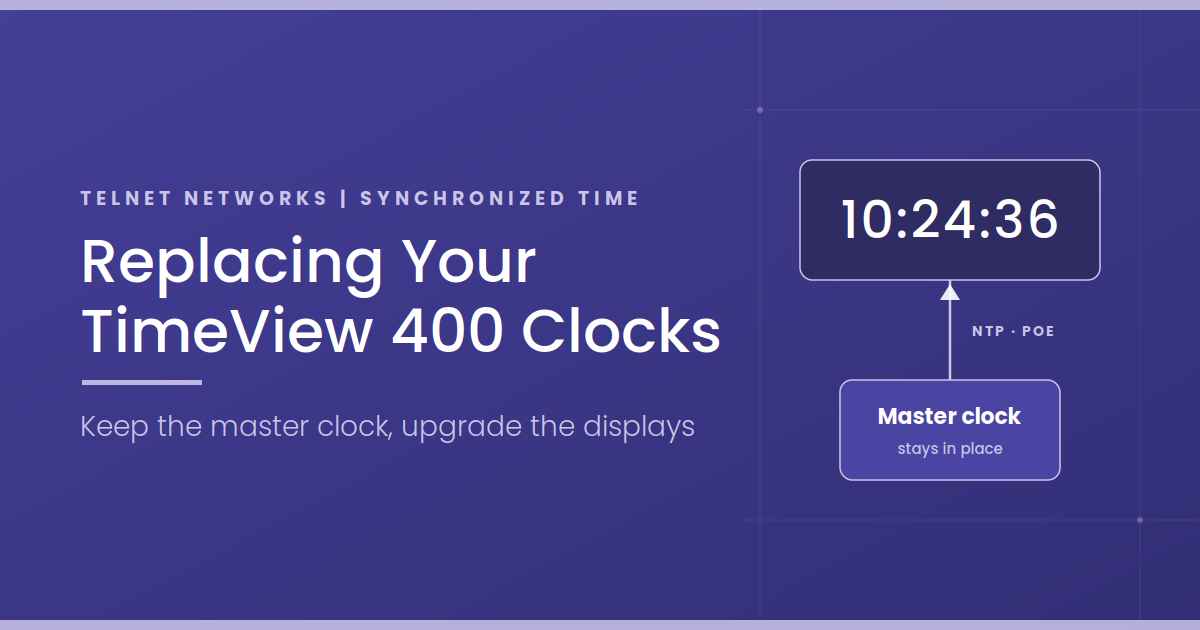

Sapling is proud to introduce our newest synchronized clock system – Sapling Wi-Fi Clocks. The Sapling Wi-Fi Clock System seamlessly interfaces with a facilitys existing Wi-Fi infrastructure, eliminating the need for a master clock and running wires between clocks. In addition, this new line offers versatile installation solutions and features.
Sapling Wi-Fi Clocks Highlights:
- Preprogrammed with third-party NTP server web addresses, in each clock, as their accurate time source
- Programmable to receive the time from an in-house NTP server
- NTP Server Synchronization Redundancy Taking time data from multiple NTP servers
- Built-in web interface in each clock for flexible setup and monitoring from any facility computer or mobile device (such as a smart phone or tablet) Wi-Fi Monitoring Software for easy supervision of the system Automatic Daylight Saving Time adjustments
- Available in different power options:
o 24 Volts
o 110 Volts
o 230 Volts
- Ability to interface with a facilitys existing Wi-Fi infrastructure
- Available in different sizes with many design styles and options to choose from!
- UL Listed FCC Certified
- If no delays, will be available end of Q3, 2017
Wi-Fi clocks are a perfect fit for projects ranging from just a few clocks to many clocks across the facility. They are also an ideal solution for multi-building campus environments already utilizing existing Wi-Fi infrastructure; the applications are endless!
For more information on Sapling’s Wi-Fi Clocks, please visit our website.
Thanks to Sapling for this article.