Skip to content

Trying to detect intrusions in your network and extracting data from your network is a tricky business. Deep insight requires a deep understanding of the context of your network traffic—where are connections coming from, where are they going, and what are the specific applications in use. Without this breadth of insight, you can’t take action to stop and remediate attacks, especially from Advanced Persistent Threats (APT).

To see how Ixia helps its customers gain this actionable insight into the applications and threats on their network, we invite you to watch this quick demo of Ixia’s Application and Threat Intelligence Processor (ATIP) in action. Chief Product Officer Dennis Cox uses Ixia’s ATIP to help you understand threats in real time, with the actual intrusion techniques employed in the Sony breach.

Additional Resources:

Ixia Application and Threat Intelligence Processor

Thanks to Ixia for the article.
Related Posts

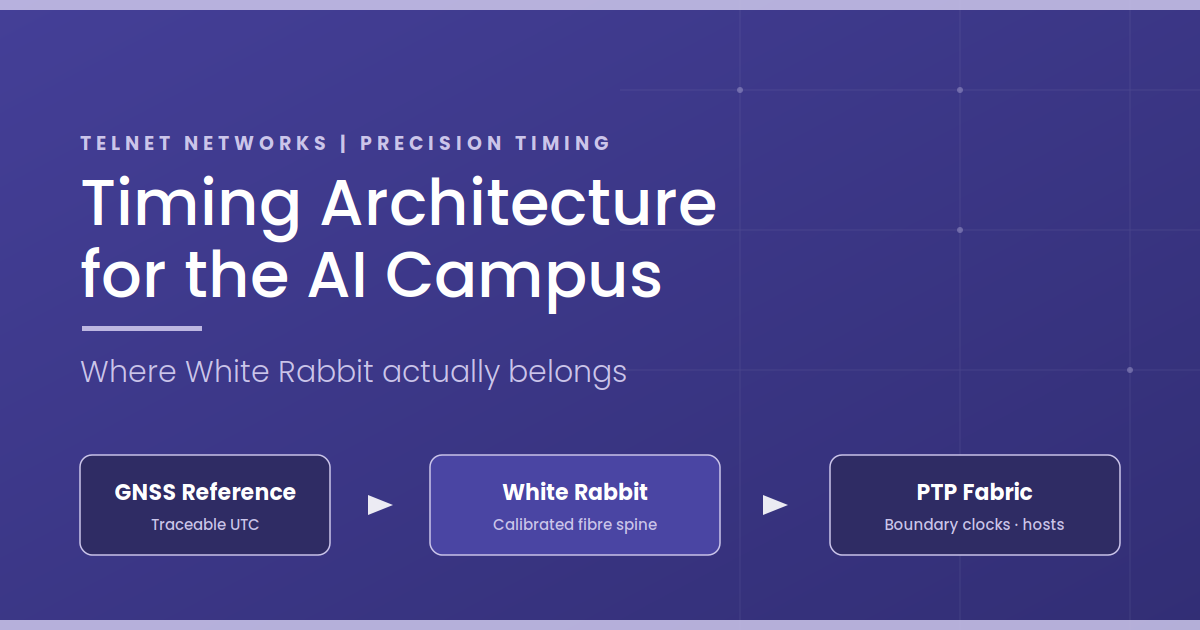
Understanding Precision Timing in 5G and O-RAN Networks

Understanding Precision Timing in 5G and O-RAN Networks

5G is doing more than just speeding up our downloads—it’s completely changing how mobile networks are architected. Unlike the LTE…
The Heartbeat of Quantum: How White Rabbit Synchronization is Moving Innovation from the Lab to the Network

The Heartbeat of Quantum: How White Rabbit Synchronization is Moving Innovation from the Lab to the Network

Why Sub-Nanosecond Timing is the Missing Link for Distributed Quantum Computing and QKD For quantum scientists and researchers, the challenge…
Precision, Visibility, and Validation: Optimizing 5G Open RAN with Aukua Systems

Precision, Visibility, and Validation: Optimizing 5G Open RAN with Aukua Systems

In the world of 5G and Open RAN (O-RAN), “good enough” testing simply doesn’t cut it. As networks disaggregate into…
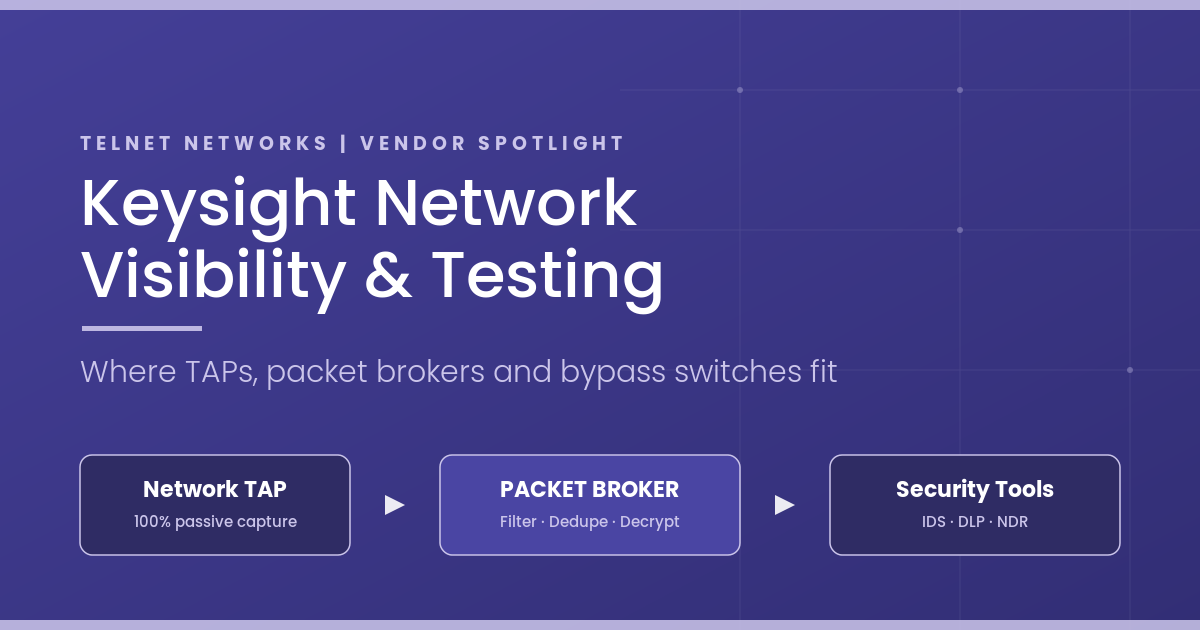
Introducing Cubro’s EXA48800: Advanced Network Visibility for High-Speed Infrastructure

Introducing Cubro’s EXA48800: Advanced Network Visibility for High-Speed Infrastructure

In today’s complex digital environments, where data moves at extreme speeds and network architectures span multiple layers, visibility is no…
WiFi vs 2-Wire Systems for Synchronized Clocks in your Facility

WiFi vs 2-Wire Systems for Synchronized Clocks in your Facility

In facilities such as schools, hospitals, and corporate offices, synchronized clocks play a critical role in ensuring order, punctuality, and…