Skip to content

Two common methods to copy traffic to your monitoring or security tools is a Span port or network tap. Span can be convenient for quick troubleshooting, remote locations or when you do not have access to the physical infrastructure. The risk of using a span port is that

  • It can be over subscribed, and the lowest priority when it comes to forwarding all the packets to the intended device.
  • Using a SPAN port is processor-intensive and can have a negative performance on the switch itself.

To avoid this we can use a network TAP which is a simple device that connects directly to the cabling infrastructure to split or copy packets for monitoring purposes such as security or packet capture devices.

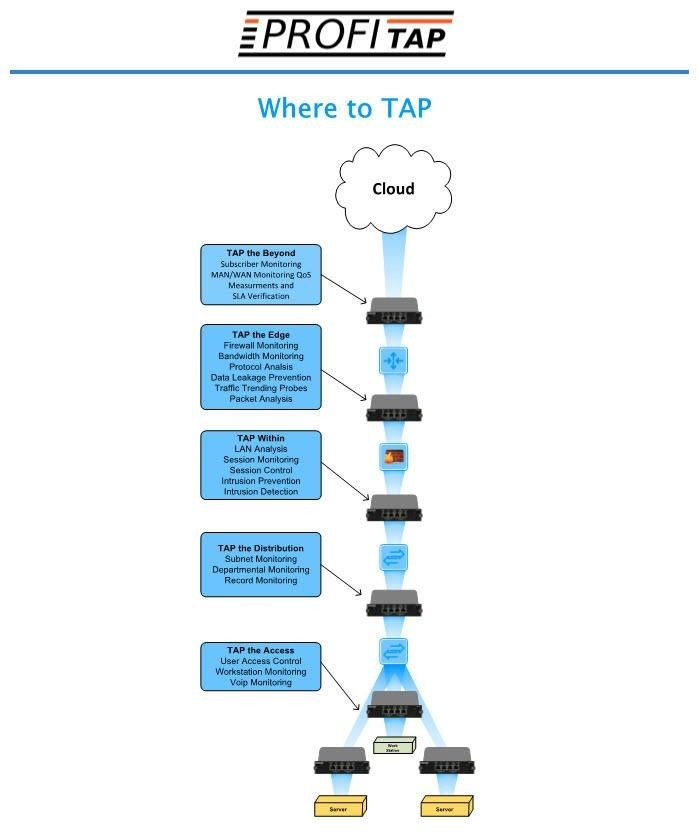
So where do I deploy a tap? A quick answer to this is anywhere you need 100% of the data all the time from L1 to L7. The above diagram is also a useful reference guide.

Thank you to ProfiTap for the article.
Related Posts

Holiday 2025 Closures

Holiday 2025 Closures

As the holiday season approaches and we wrap up 2025, our team will be taking a short break to rest,…
2025: A Year in Review

2025: A Year in Review

As the year comes to a close, it’s the perfect time to reflect on the insights, innovations, and milestones that…
StableNet Telco: The Unified OSS Platform Built for Modern Service Providers

StableNet Telco: The Unified OSS Platform Built for Modern Service Providers

Why Service Providers Across Canada Are Choosing Infosim StableNet for Automation, Visibility, and Operational Efficiency For Canadian service providers, the…
Safran Product Update

Safran Product Update

As PNT technology continues to evolve, Safran remains at the forefront of innovation, delivering advanced solutions designed to meet the…
Telnet Networks’ Approach to Zero Trust: A Practical Guide for Modern Enterprises

Telnet Networks’ Approach to Zero Trust: A Practical Guide for Modern Enterprises

Zero Trust has quickly evolved from a niche cybersecurity concept into a foundational strategy for organizations looking to secure increasingly…