
Why Choose an Anti-Jamming Antenna Over a Standard Antenna

Signal integrity is the backbone of modern communication and navigation systems. In fields like defense, transportation, and logistics, even brief interruptions or inaccuracies can disrupt operations, compromise safety, or lead to costly delays. Standard antennas can handle basic signal reception but are vulnerable to interference from natural sources such as solar storms or atmospheric conditions, as well as intentional threats like signal jamming.

Anti-jamming antennas are designed to address these challenges. They can detect and reduce interference in real time, maintaining reliable performance even in demanding or contested environments. This level of resilience ensures that critical communications and navigation systems remain accurate, secure, and operational when it is needed most.

What’s the Difference Between Standard and Anti-Jam Antennas?

Standard antennas are widely used in everyday applications and perform well under normal conditions but can be affected by environmental interference, signal congestion, or other sources of disruption, which may lead to reduced accuracy or occasional signal loss.

An anti-jamming antenna, on the other hand, is specifically designed to maintain reliable signal reception even in challenging or hostile environments. It uses advanced technologies such as adaptive filtering, directional reception, and signal processing algorithms to detect and reduce interference. This allows the antenna to block or mitigate the effects of intentional jamming, electronic noise, and environmental disruptions. Anti-jamming antennas are commonly used in defense, critical infrastructure, and high-precision navigation systems where consistent performance and security are essential.

Why Anti-Jamming Antennas over Standard?
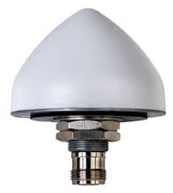
Anti-jamming antennas provide a clear advantage over standard antennas because they are designed to maintain reliable signal reception even in environments with interference or intentional disruption. GPS jamming incidents are becoming more frequent and serious worldwide. Sweden reports Russian GPS jamming over the Baltic, disrupting flights and raising security concerns. Fake signals caused flight disruptions at Delhi Airport, showing how vulnerable navigation systems can be.

Even high-profile operations are affected. An EU leader’s plane was hit by suspected Russian GPS jamming over Bulgaria, and GPS disruptions near Venezuela and Trinidad highlight the global reach of this problem. These events demonstrate how exposed navigation and communication networks can be when interference occurs.

Here are some key reasons why anti-jamming antennas are the best choice:

Enhanced Signal Reliability
Standard antennas are prone to interference from natural sources, electronics, and jamming, which can cause signal loss or dropped communications. Anti-jamming antennas detect and reduce interference, keeping signals stable even in challenging environments.

Protection Against Intentional Jamming
In defense and critical infrastructure, deliberate signal disruption is a real threat. Anti-jamming antennas use filtering, directional reception, and adaptive algorithms to maintain operations, unlike standard antennas that can be easily affected.

Improved Accuracy for Navigation and Timing
GPS and GNSS systems require precise signal reception. Anti-jamming antennas reduce noise and maintain signal clarity, ensuring accurate positioning, timing, and system performance even when interference is present.

Long-Term Cost Savings
Anti-jamming antennas may cost more upfront but reduce downtime, errors, and maintenance over time. For industries where reliability is critical, they deliver significant operational efficiency and security benefits.

Standard antennas work for everyday use, but in high-interference or precision-critical environments, anti-jamming antennas provide clear advantages. Bodet and Safran offer advanced solutions that enhance reliability, accuracy, and security, ensuring uninterrupted signal performance. If you think an anti-jamming antenna is right for you, please contact our sales team today for a free consultation and quote.

How Common is GPS Jamming? (And How to Protect Yourself)

In 2013, the Federal Communications Commission fined a person almost $32k for using a device intended to evade the fleet management tracking system on his company vehicle. The device in question: a GPS jammer.

The incident occurred at the Newark Airport after FAA and NJ Port Authority officials struggled for over two years to determine why the new ground-based augmentation system (GBAS) – a system used primarily for augmenting aircraft take-off and landing systems – was experiencing intermittent failures. The cause of these failures seemed impossible to identify.

Eventually, with help from the FCC and with specialized equipment, they were finally able to identify the cause of these inexplicable problems: A contractor on site was using a GPS jammer that not only blocked his company vehicle’s fleet tracking system, it also took down the GBAS in the process.

GPS jammers are usually small devices that plug into a vehicle’s lighter port and emit radio signals that overpower or drown out much weaker signals such as GPS or others. Although GPS jammers are illegal in the US, they are easily available online and are becoming more and more common as the use of fleet management tracking systems increases. These devices may seem relatively harmless at first glance, but their potential to cause harm is significant.

The case of the jammer at the Newark Airport is a perfect example. A simple $30 device was able to take down a state-of-the-art, highly sophisticated landing system at one of the busiest airports in the world. Worse, the device user wasn’t even trying to do so. Imagine what a person who DID intend to do harm could do?

Remember, GPS is used for much more than just navigation. It’s also the primary source of timing and synchronization in critical infrastructures such as financial, communications, industrial, the power grid, and more. In fact, these infrastructures are so critically reliant upon GPS for timing and synchronization that over the past several years, the Department of Homeland Security has begun an initiative to raise awareness of the threat and find solutions to safeguard these vital systems.

In timing applications, jammers can disrupt the GPS signal, causing the underlying systems to lose their ability to synchronize their internal clocks and, in turn, their ability to stay in sync with the rest of the network. Since many critical infrastructures sectors require synchronization across their network to be within millionths of a second, even short-term GPS outages can have a major impact. Worse, when an outage occurs, there’s typically nothing to indicate that it’s a result of jamming. The GPS signal simply is not received anymore.

To make matters even more dire, many of the datacenters that house the servers these networks run on are in warehousing districts (with trucks coming and going frequently) or near major highways. These are two of the most likely places to encounter GPS jammers. In fact, at Orolia they know from experience and real-life examples that it not only happens … it’s relatively common.

It was with these threats in mind that Orolia has developed solutions to protect its customers. Late last year, they announced the release of BroadShield, which uses sophisticated algorithms to interrogate the RF signal being consumed by GPS receivers to detect anomalies such jamming or spoofing. And recently, they released a new anti-jamming (AJ) antenna.

The new AJ antenna attenuates, or blocks, RF signals that come from near the horizon. True signals come from the satellites near the zenith. False interfering ones typically come from the horizon.

A good way to visualize how it works is to stand with your arms straight out to either side, parallel with the floor, and then raise them up to create a 30-degree angle from the floor. If you were a GPS antenna on the roof of a datacenter, any RF signal coming from below your arms would be blocked. Since the most common source of jamming comes from people trying to evade fleet management tracking systems – in cars or trucks, or on the ground – the AJ antenna is a very effective method of protecting critical networks.

The AJ antenna is also a drop-in replacement for traditional GPS antennas, making it easy to deploy. It requires no special power, mounting, or placement considerations beyond what a standard antenna needs. We’ve had a chance to test this with some customers who were experiencing GPS outages due to jamming and have recorded some remarkable results.