The Heartbeat of Quantum: How White Rabbit Synchronization is Moving Innovation from the Lab to the Network

Why Sub-Nanosecond Timing is the Missing Link for Distributed Quantum Computing and QKD

For quantum scientists and researchers, the challenge is no longer just about generating qubits; it is about scaling them. Whether you are working on distributed quantum computing, Quantum Key Distribution (QKD), or long-distance entanglement, you face the same fundamental hurdle: synchronization.

To entangle distant quantum nodes, photons must arrive within a fraction of their coherence time—often requiring synchronization accuracy below 10 picoseconds. Standard NTP or even basic PTP solutions simply cannot meet these requirements.

At Telnet Networks, we bridge the gap between theoretical physics and deployed infrastructure. Today, we are highlighting White Rabbit (WR)—the Ethernet-based timing technology born at CERN—and how our partners Safran and Timebeat are productizing this technology to power the next generation of quantum research.

Why White Rabbit?

Originally developed to synchronize accelerators at CERN, White Rabbit combines the IEEE 1588 Precision Time Protocol (PTP) with Synchronous Ethernet (SyncE) to achieve sub-nanosecond accuracy and picosecond-level precision over standard optical fiber,.

For the quantum sector, WR offers three critical advantages:

  • Determinism: It actively compensates for fiber propagation delays and environmental changes (like temperature shifts), ensuring stability over distances ranging from a single lab campus to metro links exceeding 80km.
  • Scalability: Unlike point-to-point clock cabling, WR scales to thousands of nodes using standard Ethernet switches, allowing you to synchronize heterogeneous equipment.
  • Coexistence: Classical WR timing signals can co-propagate with quantum signals on the same fiber using Wavelength Division Multiplexing (WDM), economizing expensive fiber leases.

Solution Spotlight: Safran Navigation & Timing

Safran (formerly Orolia) has been a pioneer in industrializing White Rabbit. Their solutions are particularly relevant for researchers needing integrated instrumentation control.

White Rabbit Z16 & WR-ZEN

For the network layer, Safran’s White Rabbit Z16 acts as the backbone, offering 16 optical ports to distribute time across your facility. For end-points, the WR-ZEN boards provide the flexibility to output precise PPS and 10MHz signals to legacy lab equipment that isn’t natively WR-compatible.

Recent Innovation: CERN recently partnered with Qunnect and Single Quantum to launch a new quantum networking lab, using Safran-compatible White Rabbit technology to achieve sub-nanosecond alignment for entanglement distribution.

The Quantum Instrumentation Control Kit (QICK)

If you are building superconducting quantum hardware or quantum sensors, you should know about QICK. Developed in partnership with Fermilab, QICK is an open-source FPGA-based control and readout system manufactured by Safran.

What it does: It provides direct synthesis of control pulses (up to 6 GHz) and ultra-low noise readout.

The WR Connection: It features built-in White Rabbit support, allowing multiple QICK boards to be synchronized to sub-nanosecond precision. This enables the scaling of qubit control across multiple chassis without losing phase coherence.

Solution Spotlight: Timebeat

Timebeat brings a focus on open standards and commercial accessibility, making it easier to deploy CERN-grade timing in enterprise and data center environments. Their ecosystem is built to be “plug-and-play” for researchers moving from proof-of-concept to pilot networks.

Open Time Node WR

For labs managing a mix of modern and legacy instrumentation, the Open Time Node WR serves as a critical bridge.

What it does: It extends your optical timing network with four independent White Rabbit ports while simultaneously providing ten high-quality frequency outputs.

Why it matters: This node allows you to synchronize legacy equipment (such as oscilloscopes or signal generators requiring 10MHz inputs) to the same sub-nanosecond optical backbone as your quantum devices, ensuring consistent timing across your entire experimental topology

Open Time Switch WR

High-density connectivity is essential for data-center-scale quantum experiments. Timebeat’s Open Time Switch WR offers 24 ports (including 8x 10GbE ports), allowing for high-bandwidth data and timing distribution in a single rack unit.

OEM-Ready Mezzanine Boards

For scientists building custom detectors or proprietary quantum modems, Timebeat offers White Rabbit Mezzanine Boards.

Application: These compact modules allow you to embed sub-nanosecond timing directly into your custom PCB designs without engineering the timing circuit from scratch.

Benefit: Instantly make your custom scientific instruments White Rabbit compatible and interoperable with the wider network.

Software-Defined Visibility

Timebeat emphasizes visibility. Their platform allows researchers to monitor clock stability and sync performance in real-time, which is critical when debugging why a Bell-state measurement might have failed due to timing jitter

Applications in the Field

Quantum Networking (QKD): White Rabbit is currently being used in testbeds like the DCQnet (Washington, DC) to synchronize nodes for entanglement swapping. NIST researchers have demonstrated that WR signals can coexist with quantum channels even over 100km of fiber.

Distributed Quantum Computing: By synchronizing independent QPUs, WR enables the “interconnects” required to scale computing power beyond a single refrigerator.

Radio Astronomy: Facilities like the Square Kilometer Array (SKA) utilize WR to synchronize telescopes across vast deserts, acting as a single giant sensor.

Ready to Synchronize Your Lab?

At Telnet Networks, we are Canadian experts in mission-critical network infrastructure. We can help you design a timing architecture that leverages the best of Safran and Timebeat to ensure your quantum experiments are never limited by the speed of your clock.

Contact our team today to discuss your synchronization requirements for your quantum projects.

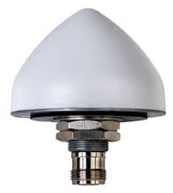
Why Choose an Anti-Jamming Antenna Over a Standard Antenna

Signal integrity is the backbone of modern communication and navigation systems. In fields like defense, transportation, and logistics, even brief interruptions or inaccuracies can disrupt operations, compromise safety, or lead to costly delays. Standard antennas can handle basic signal reception but are vulnerable to interference from natural sources such as solar storms or atmospheric conditions, as well as intentional threats like signal jamming.

Anti-jamming antennas are designed to address these challenges. They can detect and reduce interference in real time, maintaining reliable performance even in demanding or contested environments. This level of resilience ensures that critical communications and navigation systems remain accurate, secure, and operational when it is needed most.

What’s the Difference Between Standard and Anti-Jam Antennas?

Standard antennas are widely used in everyday applications and perform well under normal conditions but can be affected by environmental interference, signal congestion, or other sources of disruption, which may lead to reduced accuracy or occasional signal loss.

An anti-jamming antenna, on the other hand, is specifically designed to maintain reliable signal reception even in challenging or hostile environments. It uses advanced technologies such as adaptive filtering, directional reception, and signal processing algorithms to detect and reduce interference. This allows the antenna to block or mitigate the effects of intentional jamming, electronic noise, and environmental disruptions. Anti-jamming antennas are commonly used in defense, critical infrastructure, and high-precision navigation systems where consistent performance and security are essential.

Why Anti-Jamming Antennas over Standard?

Anti-jamming antennas provide a clear advantage over standard antennas because they are designed to maintain reliable signal reception even in environments with interference or intentional disruption. GPS jamming incidents are becoming more frequent and serious worldwide. Sweden reports Russian GPS jamming over the Baltic, disrupting flights and raising security concerns. Fake signals caused flight disruptions at Delhi Airport, showing how vulnerable navigation systems can be.

Even high-profile operations are affected. An EU leader’s plane was hit by suspected Russian GPS jamming over Bulgaria, and GPS disruptions near Venezuela and Trinidad highlight the global reach of this problem. These events demonstrate how exposed navigation and communication networks can be when interference occurs.

Here are some key reasons why anti-jamming antennas are the best choice:

Enhanced Signal Reliability
Standard antennas are prone to interference from natural sources, electronics, and jamming, which can cause signal loss or dropped communications. Anti-jamming antennas detect and reduce interference, keeping signals stable even in challenging environments.

Protection Against Intentional Jamming
In defense and critical infrastructure, deliberate signal disruption is a real threat. Anti-jamming antennas use filtering, directional reception, and adaptive algorithms to maintain operations, unlike standard antennas that can be easily affected.

Improved Accuracy for Navigation and Timing
GPS and GNSS systems require precise signal reception. Anti-jamming antennas reduce noise and maintain signal clarity, ensuring accurate positioning, timing, and system performance even when interference is present.

Long-Term Cost Savings
Anti-jamming antennas may cost more upfront but reduce downtime, errors, and maintenance over time. For industries where reliability is critical, they deliver significant operational efficiency and security benefits.

Standard antennas work for everyday use, but in high-interference or precision-critical environments, anti-jamming antennas provide clear advantages. Bodet and Safran offer advanced solutions that enhance reliability, accuracy, and security, ensuring uninterrupted signal performance. If you think an anti-jamming antenna is right for you, please contact our sales team today for a free consultation and quote.

Safran SecureSync: A Vital Tool for Ensuring Public Safety in a Connected World

In today’s interconnected world, public safety depends on reliable and secure communication, coordination, and operational precision. From emergency response teams to critical infrastructure operators, organizations must rely on systems that are both secure and accurate. Safran’s SecureSync is a powerful solution designed to meet these needs, offering a blend of precise time synchronization, reliable security, and unparalleled reliability. Here’s why the SecureSync GPS/GNSS -based Network Time Server is a vital tool for enhancing public safety.

The Importance of Time Synchronization

Accurate timing is crucial in various scenarios to maintain synchronization, improve decision-making, and enhance overall effectiveness. SecureSync’s precise timing capabilities ensure that all connected systems and devices operate in harmony, minimizing errors and enhancing situational awareness across public safety operations.

1. Emergency Response Coordination
During large-scale emergencies, first responders—including police, fire, and medical teams—must work in seamless coordination. Precise time-stamping of communications and data logs ensures synchronization across all parties, enabling faster and more effective decision-making during critical situations.

2. Critical Infrastructure Protection
Utilities such as power grids, water supplies, and transportation systems depend on synchronized operations to remain functional and resilient. Timing discrepancies can result in outages, inefficiencies, or vulnerabilities that jeopardize public safety.

3. Event Reconstruction
Following an incident, accurate time-stamped data plays a vital role in forensic analysis, determining the sequence of events, and implementing preventative measures to avoid future occurrences.

SecureSync’s precise timing capabilities ensure that all connected systems and devices operate in harmony, minimizing errors and enhancing situational awareness across public safety operations.

Regulatory Compliance

Many public safety organizations must meet strict timing and security standards. SecureSync is designed to ensure compliance and reliability, helping agencies avoid penalties, maintain operational integrity, and build public trust while supporting long-term system performance.

NERC CIP Standards
For power utilities, SecureSync supports compliance with the North American Electric Reliability Corporation (NERC) Critical Infrastructure Protection standards, safeguarding the reliability of essential services.

Canadian Data Security Requirements
For organizations handling sensitive information, including law enforcement agencies, systems must align with applicable federal and provincial regulations, such as the Personal Information Protection and Electronic Documents Act (PIPEDA) and provincial privacy laws. These requirements ensure the secure handling, storage, and access of sensitive information.

Alignment with Global Standards:

While Canadian-specific regulations apply, many organizations also align with global frameworks such as ISO/IEC 27001 (Information Security Management Systems) to ensure comprehensive security practices.

Enhancing Resilience

Resilience is key to public safety, ensuring critical operations stay functional under challenging conditions. SecureSync enhances system resilience, helping public safety organizations maintain reliability and deliver essential services during adversity.

Redundant Architectures
With redundant power supplies and timing sources, SecureSync ensures continuous operation, even during component failures.

High Availability
The system’s reliable design minimizes downtime, enabling uninterrupted operation during emergencies or disruptions.

SecureSync addresses the critical need for secure, accurate, and synchronized systems, helping organizations tackle public safety challenges. From real-time coordination during emergencies to protecting vital infrastructure and ensuring compliance, it showcases how innovation drives resilience and reliability.

Telnet Networks proudly supports organizations in achieving their security and synchronization goals with solutions like SecureSync. Contact us today for a consultation or a tailored quote to meet your specific operational needs.