
Achieving comprehensive visibility across complex physical, virtual, and cloud infrastructure remains a persistent challenge for modern IT teams. Security and performance monitoring tools are only as effective as the data they receive, and when network traffic is dropped, altered, or limited by blind spots, both security posture and operational efficiency suffer. To address this, many enterprises rely on specialized visibility manufacturers instead of standard network switch mirroring, with Garland Technology standing out as a pioneer in the space.
Founded in 2010 by Chris Corcoran and Jerry Dillard—the engineer credited with inventing the world’s first Bypass TAP—Garland Technology was built to engineer reliable, hardware-based network access solutions. While many technology firms have shifted toward software-driven or virtualized approaches, Garland has maintained a strict focus on robust, wire-speed physical infrastructure. Today, the company designs and manufactures its solutions in the United States, helping global enterprises ensure their monitoring and security tools receive 100% of network data, 100% of the time.
For technical decision-makers assessing their visibility layer, here is a concise breakdown of the Garland product suite, focused on core product types, key technical features, and ideal applications.
Network TAPs (Test Access Points)
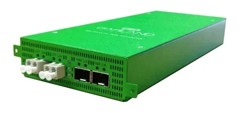
Garland Technology’s Network TAPs provide reliable, hardware-based network visibility for organizations that require complete access to network traffic without impacting production performance. Unlike SPAN or mirror ports that can drop packets or introduce blind spots, Garland TAPs deliver continuous, unfiltered traffic to monitoring and security tools.
Core Garland TAP Options
Passive Fiber TAPs
Use optical splitters to copy network traffic with zero latency and no power requirements. These TAPs provide complete data visibility without affecting live traffic, making them ideal for high-performance and low-latency environments such as financial services and data centers.
Copper TAPs
Deliver dependable visibility for copper and legacy network environments. Copper TAPs provide direct access to traffic for monitoring, troubleshooting, and security analysis without relying on overloaded SPAN ports.
Bypass TAPs
Designed for inline security deployments, Bypass TAPs continuously monitor the health of connected tools such as firewalls and intrusion prevention systems. If a tool loses power or fails, the TAP automatically switches to bypass mode to maintain network uptime and avoid traffic disruption.
Key Features
Garland Packet Brokers are designed to improve tool efficiency, extend the lifecycle of existing monitoring appliances, and provide flexible traffic distribution for complex network environments. Many models support aggregation, regeneration, filtering, and traffic steering within a single platform.
Industries & Applications
Garland Packet Brokers are commonly deployed in enterprise data centers, cybersecurity operations centers (SecOps), financial services, healthcare organizations, service providers, and industrial environments where large volumes of network traffic require efficient visibility and monitoring.
Network Packet Brokers (NPBs)
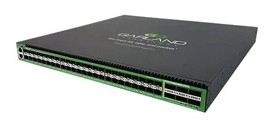
Garland Technology’s Network Packet Brokers help organizations manage and optimize growing volumes of network traffic by intelligently distributing data to monitoring and security tools. Rather than sending every packet to every appliance, Garland Packet Brokers aggregate, filter, and direct only the relevant traffic where it is needed, improving tool performance, reducing oversubscription, and maximizing network visibility efficiency.
Core Garland Packet Broker Capabilities
Traffic Aggregation & Regeneration
Combine traffic from multiple TAPs and network links into a single stream while simultaneously sending replicated traffic to multiple monitoring and security tools. This improves visibility architecture efficiency and simplifies tool deployment.
Advanced Packet Filtering
Hardware-based filtering allows traffic to be sorted using Layer 2 through Layer 4 parameters, including MAC addresses, IP addresses, ports, and VLAN tags. This ensures tools only receive the traffic relevant to their specific function.
Load Balancing
Evenly distribute traffic across multiple security or monitoring appliances to prevent oversubscription during high-traffic periods. This helps maintain consistent tool performance and improves scalability.
Scalable Performance Options
Garland Packet Brokers are available in scalable form factors supporting environments ranging from 1G to 100G and beyond, making them suitable for enterprise networks, data centers, and high-capacity backbone deployments.
Tool Optimization & Lifecycle Extension
Packet Brokers help organizations maximize the value of existing monitoring tools by filtering unnecessary traffic and enabling legacy 10G tools to remain operational in newer 40G and 100G environments.
Industries & Applications
Garland Packet Brokers are widely used in enterprise data centers, cybersecurity operations centers (SecOps), financial institutions, healthcare networks, service providers, and large-scale industrial environments where efficient traffic management and high-performance monitoring are essential.
Garland’s Architectural Advantage
Organizations look to Garland Technology because they do not take shortcuts on hardware integrity. Whether dealing with legacy copper, multi-rate enterprise fiber, or sensitive industrial environments, Garland provides a robust physical foundation. By eliminating the data delivery gaps that lead to security blind spots, Garland allows firewalls, IDS, and performance monitors to perform exactly as intended.
Ready to optimize your tool utilization, remove blind spots, or design a fail-safe inline security strategy? Reach out to our sales team today. Our visibility experts can help you architect, size, and deploy the ideal Garland Technology solution for your infrastructure requirements.