As GNSS increasingly becomes a single point of failure in a multitude of civil and military systems, the need for Assured Position, Navigation, and Timing (A-PNT) is well documented. Much of the current discussion centers on the technical challenge of maintaining ready access to accurate PNT data, but cost is also a factor.
Consider, for example, that resilient navigation systems designed to function during extended GNSS outages exist today on ships and aircraft. They use the brute force approach of an expensive, navigation-grade inertial measurement unit (IMU). These can cost hundreds of thousands of dollars (and up). From a cost perspective, this is a major deterrent for most systems that need A-PNT.
GNSS Alone: Low-Cost, But Not Enough
GNSS itself is an inexpensive technology to implement and is easily scalable, requiring only the appropriate receiver. But adding expensive, complicated A-PNT technology to ensure the continuity of PNT data when GNSS is compromised can actually undermine the intended benefits for mobile mission systems.
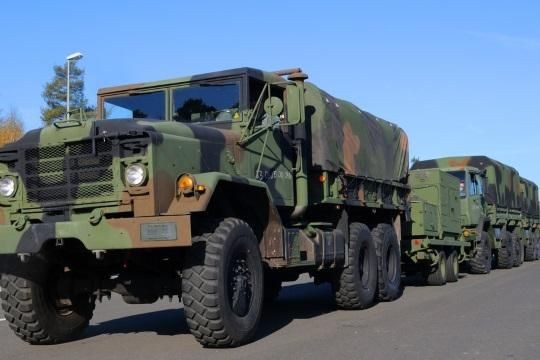
Why? Think of GNSS in military systems: tanks, satellite communications vehicles and helicopters need more PNT assuredness than a cargo truck. And there are a lot more cargo trucks than tanks and helicopters. Although cargo trucks may not be considered a “critical platform,” they still require navigation to properly support military forces. Those trucks can’t reach their intended destinations if they are spoofed. Support systems for critical applications may not require the same level of protection, but they do need A-PNT.
Maintaining a state of military readiness is a top priority for defense agencies. The ideal approach would deliver a consistent solution that is cost-effective across different platforms, with the ability to provide a compatible, scalable system to all of them. Expensive, inflexible A-PNT solutions will not solve the total problem. To provide affordable A-PNT for every link in the communications chain, a different approach is needed.
WANTED: Flexible, Practical Architecture with a Competitive Cost Structure
The ability to design system specifications based on a flexible, building-block architecture is often inhibited by the fact that most contractors only provide one part of the solution. That puts the burden on the defense agency to piece together platforms and systems of systems that are not over-engineered in terms of cost, integration complexity or capabilities.

Scalable, Open Architecture is the Key to a Turn-Key System
At Orolia, we are building on the defense-in-depth approach discussed previously to provide affordable A-PNT. Using a collection of complementary, flexible and scalable technologies, we can provide PNT precision and access at a lower cost than traditional navigation solutions that rely on high-cost IMU sensors. We offer a cost-effective, bolt-on (fast and easy to integrate) solution with open architecture that works well with existing systems and increases security on a flexible scale to suit various risk factors.
This scalability is designed within the platform, with multiple integrated technology options to provide a practical, turn-key system of systems built for each use case, yet compatible across platforms. This keeps the cost down and the functionality up.
There is no question that various military systems and platforms require different levels of criticality and different levels of precision. When considering Assured PNT, look at scalable solutions to ensure that you are not paying for more protection than you need.
This approach will enable Assured PNT to deliver comprehensive defense systems protection, rather than concentrated coverage in a limited number of platforms. Only then can trusted, reliable PNT data truly become the force multiplier for battlefield superiority.
Thank you to Jon Sinden from Spectracom for the article.