Sub-nanosecond timing over Ethernet was not born in a product roadmap. It came out of CERN, where physicists needed the White Rabbit protocol to synchronize instruments across a particle accelerator with a precision that ordinary networking had no reason to attempt. The specification is now folded into IEEE 1588-2019 as the High Accuracy profile, and it has quietly become the reference point that timing vendors across Europe still measure themselves against.
That is a useful way to think about a handful of the vendors in Telnet’s own portfolio. They are not the biggest names in their categories, but they tend to be the ones doing the interesting engineering: a packet broker maker in Vienna, a clockmaker in western France that has been keeping time since before the telephone, a Suricata-based security platform built by open-source developers in Paris. Here is what each of them has been building lately.
Cubro: Precision Engineering With New Backing
Cubro has been designing network packet brokers, TAPs and probes out of Vienna since 2003, and in December 2025 the Swedish industrial group Addtech acquired a majority stake in the company. For a Telnet customer, the practical upshot is stability: Cubro keeps its Vienna engineering team and roadmap, now with a publicly traded parent behind it (Addtech trades on Nasdaq Stockholm).
The product itself keeps moving. Cubro’s Omnia platform runs application-layer classification directly on the packet broker, an architecture the company has been pushing further as encrypted traffic makes payload-based inspection less useful across the industry. It is the same “classify once, distribute everywhere” idea that shows up increasingly in how Telnet evaluates network visibility architecture generally, and Cubro is one of the vendors building toward it in hardware.
Profitap: Forty Years of TAPs, Reshaped for OT
Profitap’s roots go back to 1984 in Strasbourg, France, before the company relocated its headquarters and R&D to Eindhoven, Netherlands. That history matters less than what the team has done recently with it: the IOTA platform extends Profitap’s TAP and packet-broker lineage into portable, high-precision capture kits built for operational technology networks, where nanosecond-level timestamp accuracy in packet capture is often the difference between a diagnosable incident and a guess.
Profitap’s engineering has always leaned toward the physically compact and the field-deployable, and IOTA is the clearest expression of that instinct: fly-away capture kits that a field engineer can carry to a substation or a plant floor rather than a rack that has to be provisioned in advance.
Infosim: A University Spin-out That Stayed Independent
Infosim was founded in 2003 as a spin-out from the University of Würzburg, and more than twenty years later it is still headquartered there, still privately held, and still developing StableNet entirely out of its German R&D team. That kind of continuity is unusual in network management software, where consolidation is the norm.
StableNet’s release cadence has stayed active through that independence. Its unified approach to fault, performance and configuration management remains vendor-agnostic by design, which is a deliberate choice for a company that could have built a walled garden and didn’t.
Timebeat: Timing Software Built on Open Standards
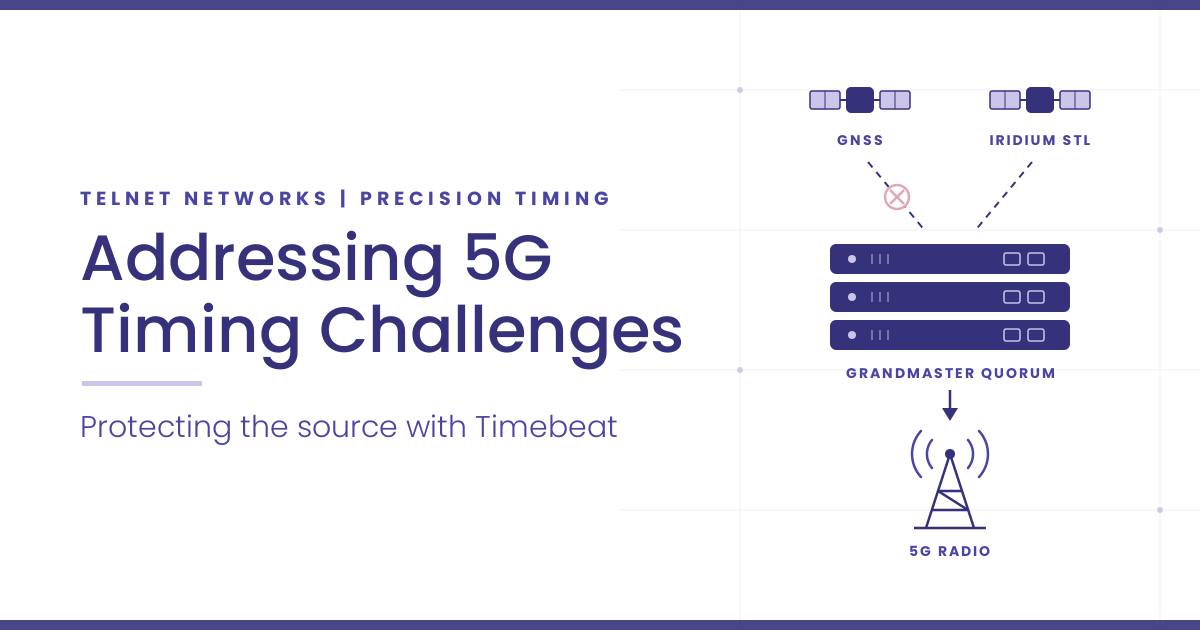
Timebeat is a UK company building PTP and NTP synchronization as software first, hardware second, which is close to the opposite of how most of the timing industry has historically worked. Its stated position on vendor lock-in is blunt: interoperability is the point, not a concession. The Timebeat.app daemon replaces chrony, ntpd and ptp4l on a host, and the company’s grandmaster hardware line extends the same open approach into rack appliances and PCIe timecards.
Timebeat also builds explicitly for interoperability with White Rabbit-based networks, which is the same protocol lineage that opened this post. It is a small detail, but it says something about how connected European timing engineering still is to that original CERN work, even decades and several product categories removed from it.
Bodet: From Mechanical Clockmaking to Network Time
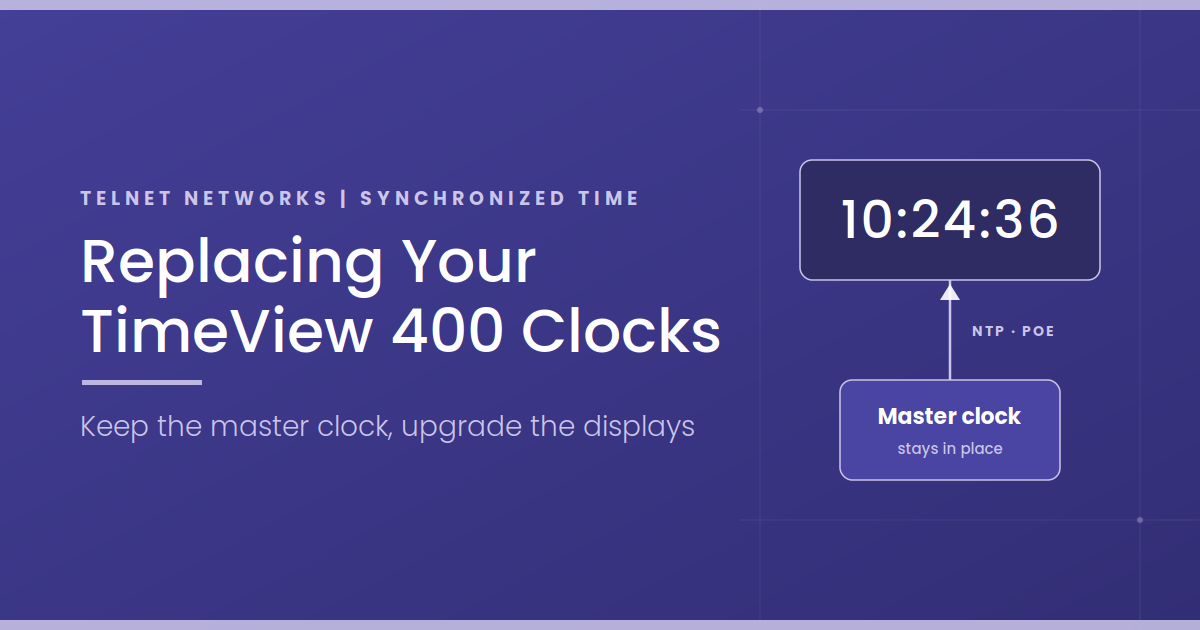
Bodet has been making clocks in Trémentines, France since the 19th century, long enough that the company’s own history predates the electrical grid it now helps synchronize. The relevant point for a network engineer is less the heritage and more what Bodet has done with it: its Netsilon line brings that clockmaking precision into NTP and PTP master clock appliances built for the same digital infrastructure everyone else in this post is building for.
Telnet has deployed Bodet clock systems where functional requirements could not be met by any other vendor and operational requirements were absolute. Performance has always met or exceeded the required standards.
Stamus Networks: Open-source Security Engineering Out of Paris
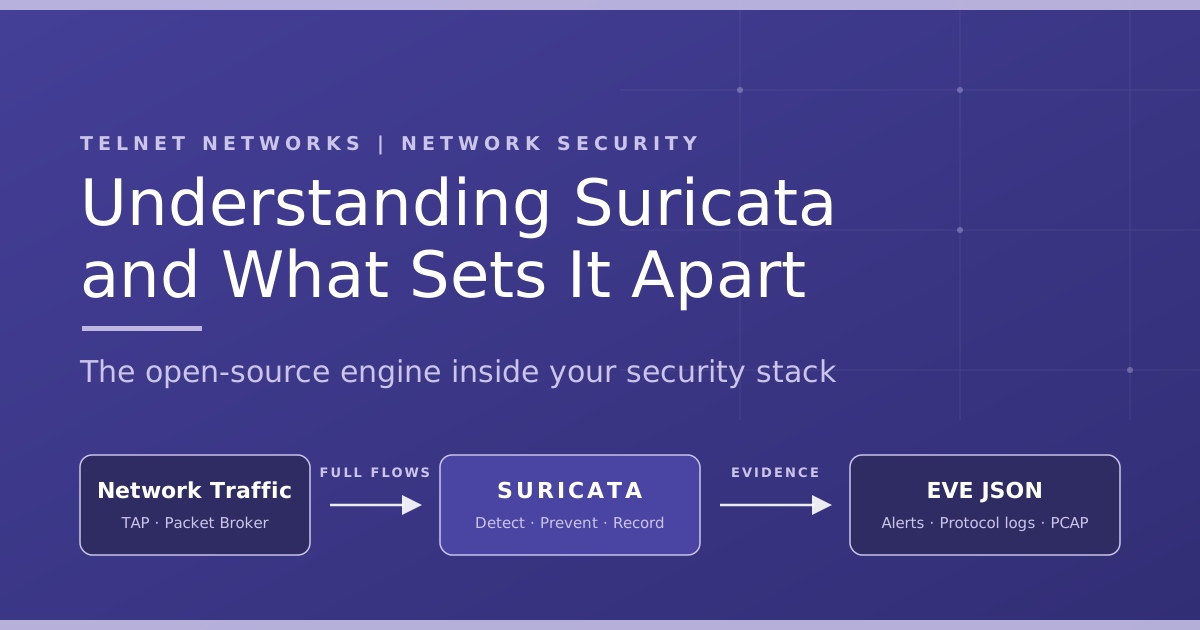
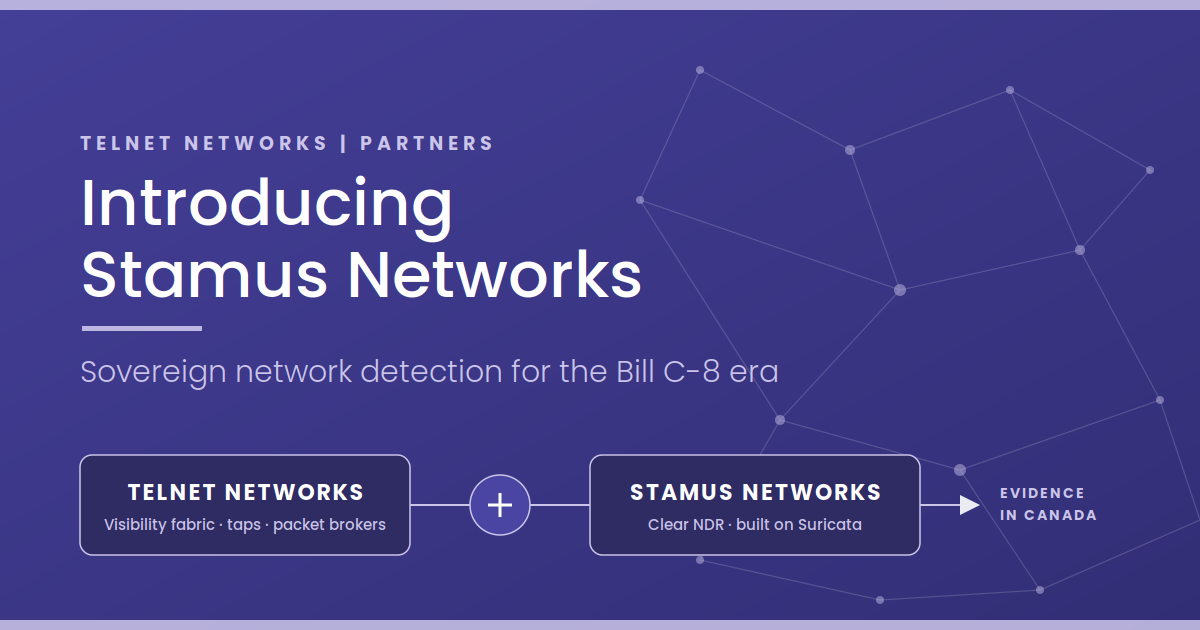
Stamus Networks was founded in 2014 by Éric Leblond and Peter Manev, both long-time core developers of Suricata, the open-source intrusion detection engine that much of the network security industry builds on in one form or another. Stamus is dual-headquartered in Paris and Indianapolis, but its product engineering and much of its leadership remain rooted in the same open-source security community that produced Suricata in the first place.
Clear NDR, Stamus’s flagship platform, turns that Suricata foundation into a full network detection and response system, and the company has kept contributing back to the open-source project rather than treating it purely as a dependency. That is a meaningfully different posture from most commercial NDR vendors, and it shows in how transparent Clear NDR is about what it is actually doing under the hood.
The Common Thread
None of these companies are chasing the same trend at the same time. Cubro is scaling with new capital behind it. Profitap is pointing forty years of TAP engineering at OT networks. Infosim has stayed independent long enough to keep StableNet vendor-agnostic on principle. Timebeat is building timing software that assumes interoperability rather than lock-in. Bodet is doing to network time what it has done to mechanical clocks for over a century. Stamus is building commercial security on an open-source foundation it still maintains.
What connects them is a certain patience with hard engineering problems, the same patience that turned a CERN physics requirement into an IEEE standard. Telnet works with all six because each one solves a specific, technical problem well, not because of where they happen to be headquartered. But it is worth noticing, occasionally, how much of the interesting work in this industry keeps coming out of the same part of the world.
Want to know where any of these fit into your network? Get in touch with our team and we’ll help you figure out what makes sense.