Skip to content

​Virtualization technology has tremendously transformed the modern data centre. Applications and operating systems are installed into virtual machine images instead of physical machines, which in turn are executed by physical servers running a hypervisor. Virtualizing applications provide many benefits, including consolidation — running multiple applications on a single physical machine — and migration — transparently moving applications across physical machines for load balancing and fault tolerance purposes.

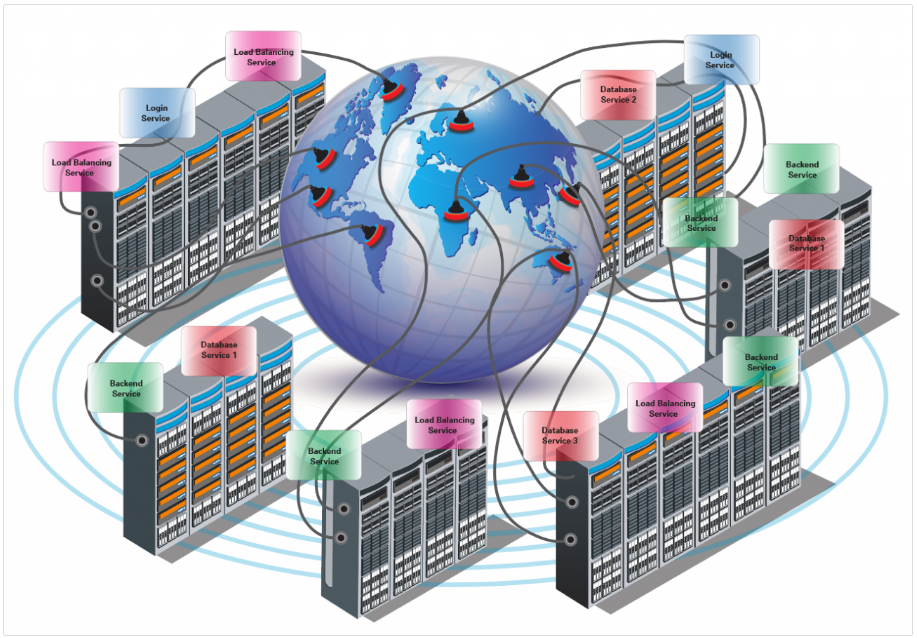
In the future, data centres would have much more complex networks. There would be thousands of microservices to monitor with each service running on a separate server/rack/data centre because of redundancy reason. In the worst case, the “application” would be running all over the world in several data centres. To add to this complexity, there are even more difficulties because the applications can jump dynamically through the data centres. As a result, classical tapping will not be possible anymore!

In such a network environment, if you use virtual TAPs on the hypervisors, then you would need a 3rd party software on each hypervisor which would result in performance degradation on the hypervisor. Additionally, the application can run on different hypervisors, so you need to have virtual TAPs for each hypervisor version. There are also security issues because the virtual TAP monitors the full switch and not only one specific microservice. Virtual tapping involves very high maintenance effort when the applications are breathing.

This is the classical approach with a lot of issues like:

  • ​Bandwidth
  • Dynamic Breathing
  • Cost
  • Complex Configuration

Research from Gartner titled ‘Building Data Center Networks in the Digital Business Era’ mentioned that when making investments in data centre networking solutions, organizations should determine if their vendors can provide a single pane of management that extends to both on-premises and public cloud workloads, including:

  • ​Network troubleshooting for workloads in multiple clouds
  • Reporting for workloads in multiple clouds
  • Creation of policy and configuration for workloads
  • Visibility for workloads in multiple clouds

​With better insight, you can set up a cloud environment that’s fully efficient and optimized for business requirements. The end goal of any data centre is to maintain excellent reliability, security and stability for users.

Thank you to Cubro for the article.
Related Posts

Introducing Stamus Networks: Network Security Built For The Bill C-8 Era

Introducing Stamus Networks: Network Security Built For The Bill C-8 Era

The ground shifted in June Bill C-8 received Royal Assent in June. For designated operators in telecommunications, energy, finance, nuclear…
From Vienna to CERN: The European Innovation Behind Modern Network and Timing Infrastructure

From Vienna to CERN: The European Innovation Behind Modern Network and Timing Infrastructure

Sub-nanosecond timing over Ethernet was not born in a product roadmap. It came out of CERN, where physicists needed the…
Encrypted Client Hello Is Here. What Can Your Network Tools Still See?

Encrypted Client Hello Is Here. What Can Your Network Tools Still See?

In March 2026 the IETF published RFC 9849, standardizing TLS Encrypted Client Hello. In plain terms, the part of the…
Vendor Spotlight: Simplifying Facility Synchronization with Novanex Solutions

Vendor Spotlight: Simplifying Facility Synchronization with Novanex Solutions

When timing is everything, clear visibility and precise data are non-negotiable. They form the backbone of your facility’s safety, compliance,…
Your AI Cluster Doesn't Need Sub-Nanosecond Timing. Your Campus Does.

Your AI Cluster Doesn't Need Sub-Nanosecond Timing. Your Campus Does.

Timing architecture for the AI campus, and where White Rabbit actually belongs. Every timing vendor now has an AI page.…