One of the major issues that IT organizations have with any form of external cloud computing is that they don’t have much visibility into what is occurring within any of those environments.
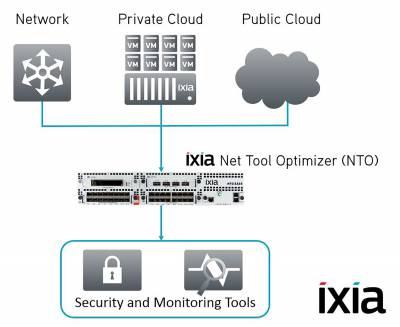
To help address that specific issue, Ixia created its Net Tool Optimizer, which makes use of virtual and physical taps to provide visibility into cloud computing environments. Now via the latest upgrade to that software, Ixia is providing support for both virtual and physical networks while doubling the number of interconnects the hardware upon which Net Tool Optimizer runs can support.
Deepesh Arora, vice president of product management for Ixia, says providing real-time visibility into both virtual and physical networks is critical, because in the age of the cloud, the number of virtual networks being employed has expanded considerably. For many IT organizations, this means they have no visibility into either the external cloud or the virtual networks that are being used to connect them.
The end goal, says Arora, should be to use Net Tool Optimizer to predict what will occur across those hybrid cloud computing environments, but also to enable IT organizations to use that data to programmatically automate responses to changes in those environments.
Most IT organizations find managing the network inside the data center to be challenging enough. With the additional of virtual networks that span multiple cloud computing environments running inside and outside of the data center, that job is more difficult than ever. Of course, no one can manage what they can’t measure, so the first step toward gaining visibility into hybrid cloud computing environments starts with something as comparatively simple as a virtual network tap.
Thanks to IT Business Edge for the article.