Skip to content

Two common methods to copy traffic to your monitoring or security tools is a Span port or network tap. Span can be convenient for quick troubleshooting, remote locations or when you do not have access to the physical infrastructure. The risk of using a span port is that

  • It can be over subscribed, and the lowest priority when it comes to forwarding all the packets to the intended device.
  • Using a SPAN port is processor-intensive and can have a negative performance on the switch itself.

To avoid this we can use a network TAP which is a simple device that connects directly to the cabling infrastructure to split or copy packets for monitoring purposes such as security or packet capture devices.

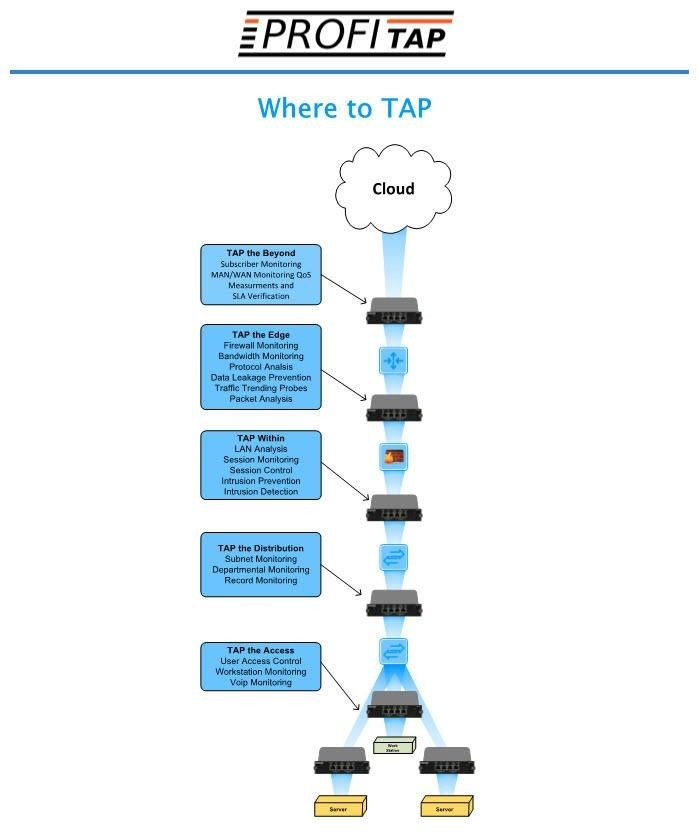
So where do I deploy a tap? A quick answer to this is anywhere you need 100% of the data all the time from L1 to L7. The above diagram is also a useful reference guide.

Thank you to ProfiTap for the article.
Related Posts

Your AI Cluster Doesn't Need Sub-Nanosecond Timing. Your Campus Does.

Your AI Cluster Doesn't Need Sub-Nanosecond Timing. Your Campus Does.

Timing architecture for the AI campus, and where White Rabbit actually belongs. Every timing vendor now has an AI page.…
Vendor Spotlight: Sapling Synchronized Clock Systems

Vendor Spotlight: Sapling Synchronized Clock Systems

In facility management and IT, silence is golden when it comes to timekeeping. You only hear about clocks when they…
The Second Ring of C-8: What Selling to Critical Infrastructure Now Requires

The Second Ring of C-8: What Selling to Critical Infrastructure Now Requires

This article is a follow-up to our Bill C-8 overview post The contract renewal arrives from a customer you’ve served…
Keysight Network Visibility, Testing and Security: Where Each Piece Fits

Keysight Network Visibility, Testing and Security: Where Each Piece Fits

You can’t secure or troubleshoot traffic you can’t see. That’s an old line, but it has become a harder problem:…
Your GPUs Are Idle. It's Probably Not the GPUs' Fault.

Your GPUs Are Idle. It's Probably Not the GPUs' Fault.

Canada is building AI data centres at unprecedented scale. Here’s how to make sure the fabric underneath them actually performs…